Domain I: Listening
CADENCES
A cadence in music refers to a sequence of at least two chords that concludes a musical phrase or section within a composition
There are 4 main types of cadences:
Perfect (Authentic) (V-I)
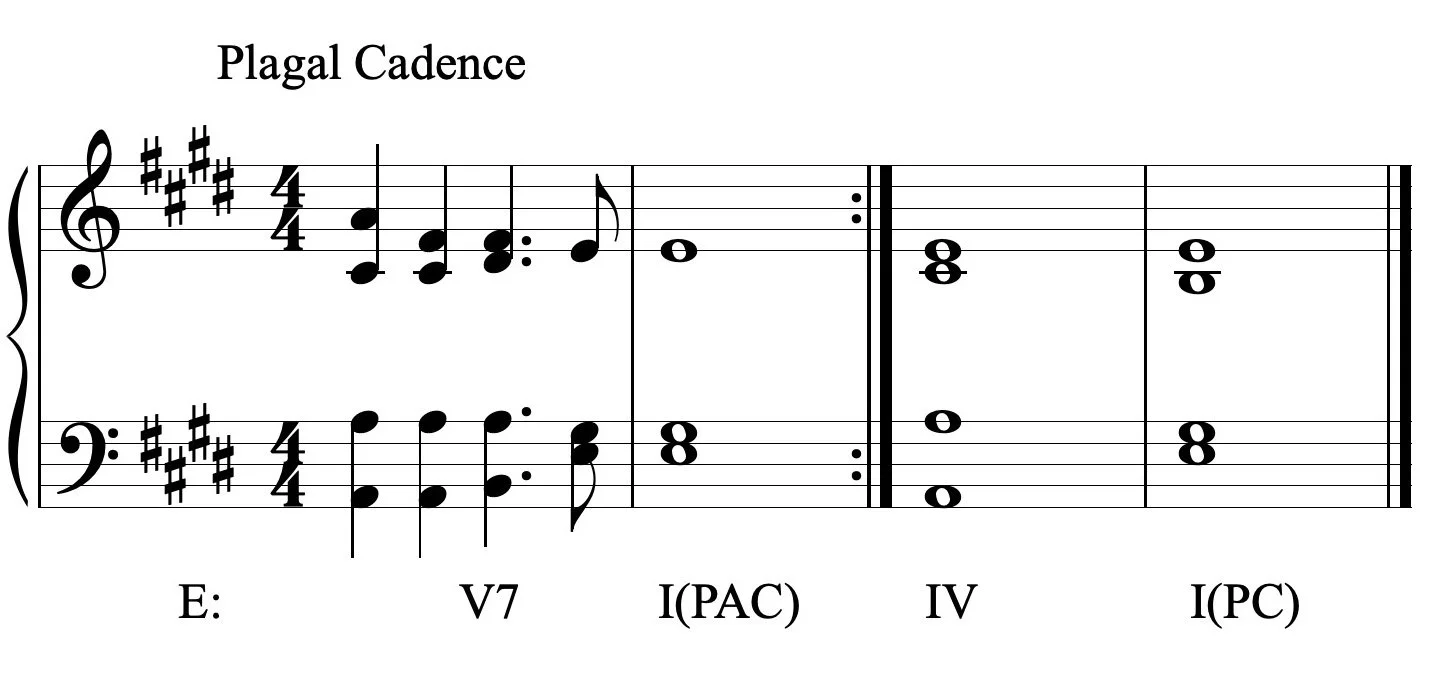
Plagal “Amen Cadence” (IV-I)
Imperfect (Half) (I-V, II-V, IV-V)
Deceptive (Interrupted) (V-VI)
Dominant to Tonic (V-I). Gives the sense that the music has concluded.
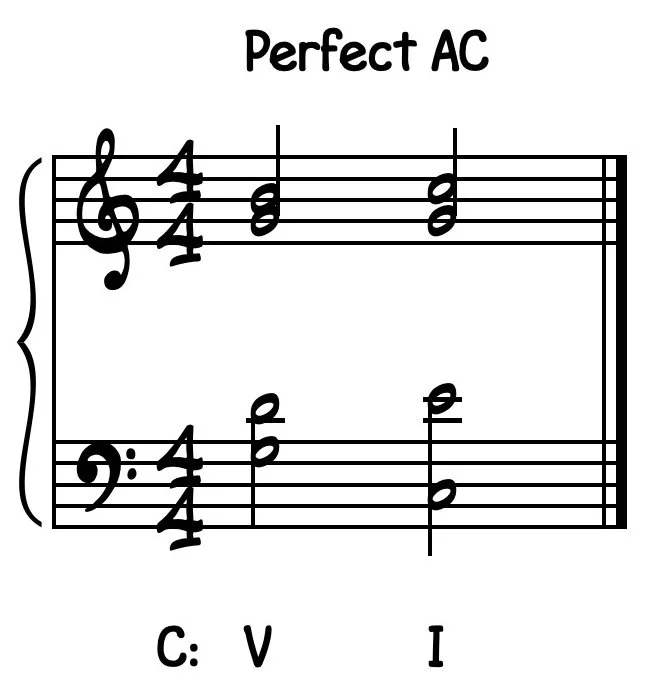
A Perfect Authentic Cadence must meet three requirements:
1. V - I progression
2. Both Chords are in Root Position
3. Tonic in the highest voicing of the Final Tonic (I) (4.1)
If these requirements are not met than the chord is considered to be an
Imperfect Authentic Cadence.
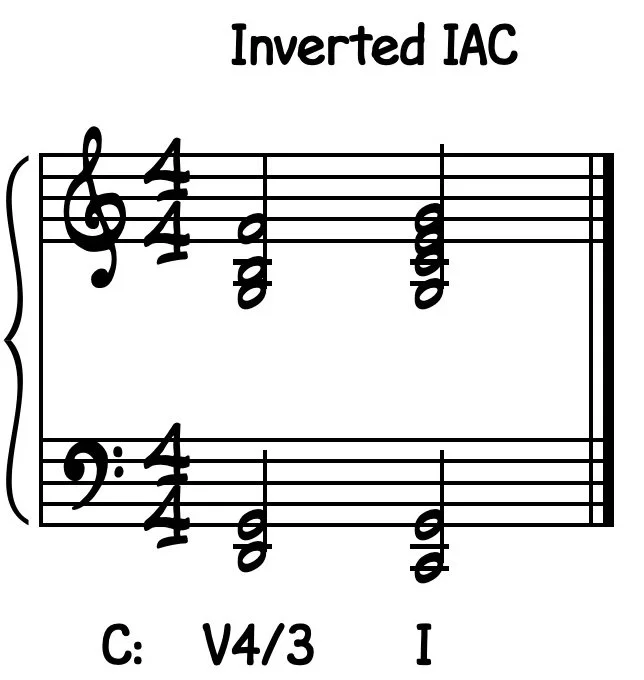
An Imperfect Authentic Cadence has three distinct types:
1. Root Position - Highest note is not the tonic - (4.2)
2. Inverted - One or both chords are inverted (4.3)
3. Leading Tone - V chord is replaced with the leading tone (vii) chord, but will still end on tonic (I). (4.4)
PERFECT/AUTHENTIC CADENCE
Example 4.1 - Perfect Authentic Cadence
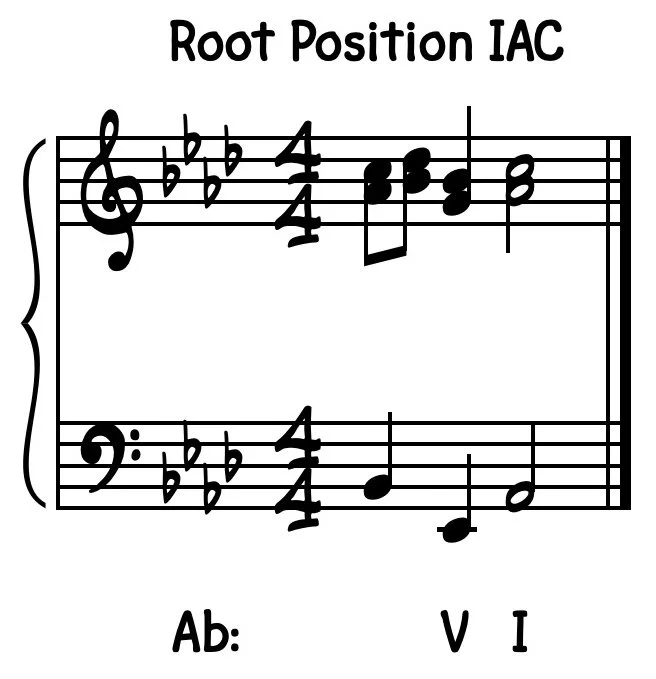
Example 4.2 - Root Position IAC
Example 4.3- Inverted IAC
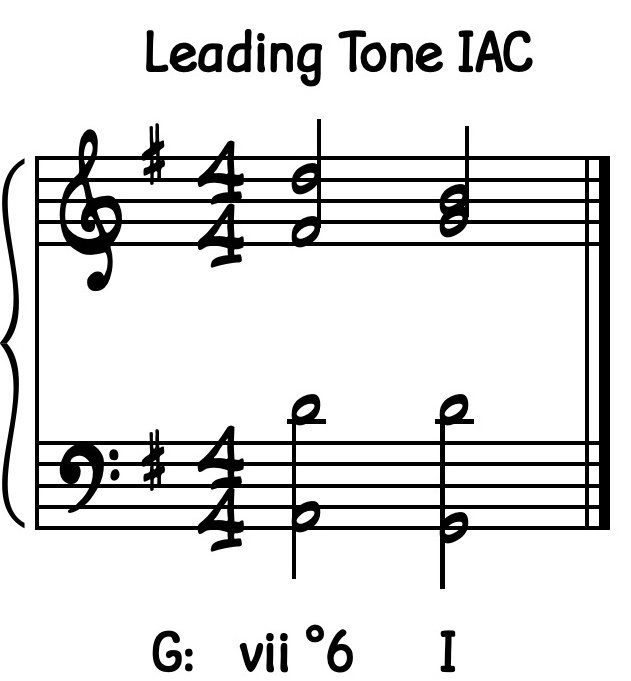
Example 4.4 - Leading Tone IAC
Subdominant to Tonic (IV-I). Still gives the listener the since that the music has finished but with a softer ending.
The cadence is often used in hymns, giving it the nickname of “Amen” cadence. A Plagal Cadence can also
be considered to be Perfect if it meets the same requirement as the Authentic Cadence, both Chords in root position and the Tonic in the highest voicing in the final chord.
In many situations, it is used as a sort of tag follow a Perfect Authentic Cadence as in Example 4.5.
Plagal Cadence
Example 4.5 - Plagal Cadence (PC)
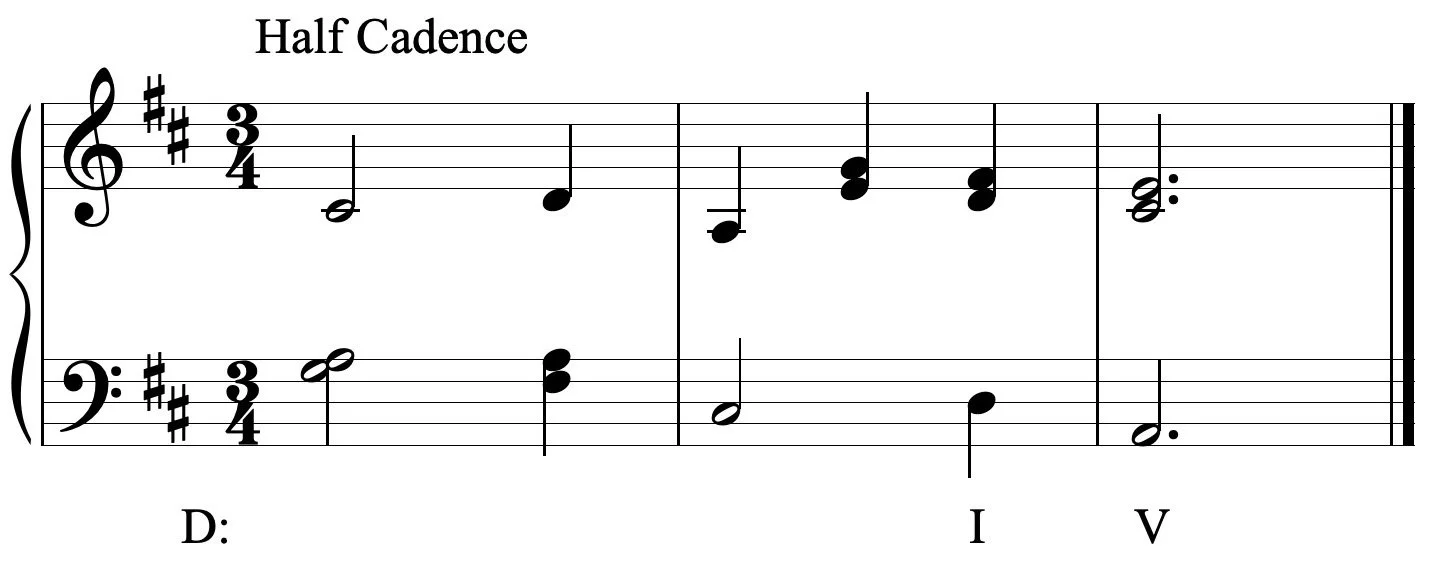
Ends on the Dominant (V), preceded by either the Tonic, Supertonic or Subdominant (I-V, ii-V or IV-V).
Also referred to as the “Half” Cadence, it leaves you feeling incomplete, like there should be something else to
finish the piece. It is often used in binary music to separate one section from another where the second section will end
on the Tonic. Example 4.6
Imperfect (Half) Cadence
Example 4.6- Half Cadence
Ends on an unexpected chord, usually V-VI. Music sounds interrupted and gives the feeling of deception. Example 4.7
This cadence is not really used to end a phrase but to extend it, until it reaches the true cadence.
Deceptive (Interrupted) Cadence
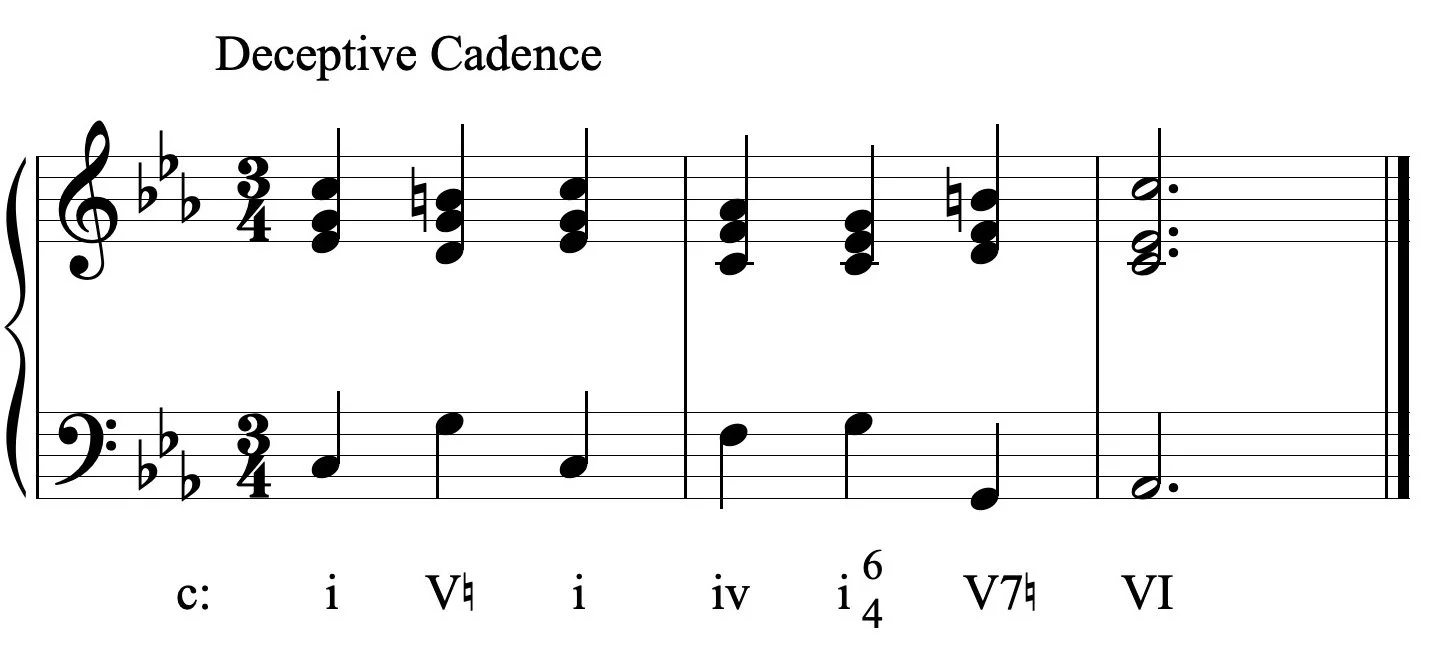
Example 4.7 - Deceptive Cadence
FINISHED CADENCES:
Two Cadences Sounds like the Ending of the Piece of Music: (Authentic & Plagal)
The Perfect Authentic Cadence is the strongest finish (V-I or V7-I), both chords must be in root position and the final chord has the tonic in the highest voicing.
The Plagal Cadence is a softer finish going from the Subdominant (IV) to Tonic (I).
UNFINISHED CADENCES:
Half Cadence ends on the Dominant chord (V) and can be approached from the Tonic (I), Supertonic (ii) or the Subdominant (IV) chords. Gives you the feeling that something is yet to come, and the song is not completed.
The Deceptive cadence ends on the VI and is approached form the Dominant chord (V). You feel like it is about to conclude and resolve to tonic but it deceives you and goes to an unexpected chord.
REVIEW
Additional Study Resources:
Additional Links